These services can signpost adults to access help if they are experiencing any of the following:
People can still access other health & care services at the same time, such as community mental health teams.
Services & their operators
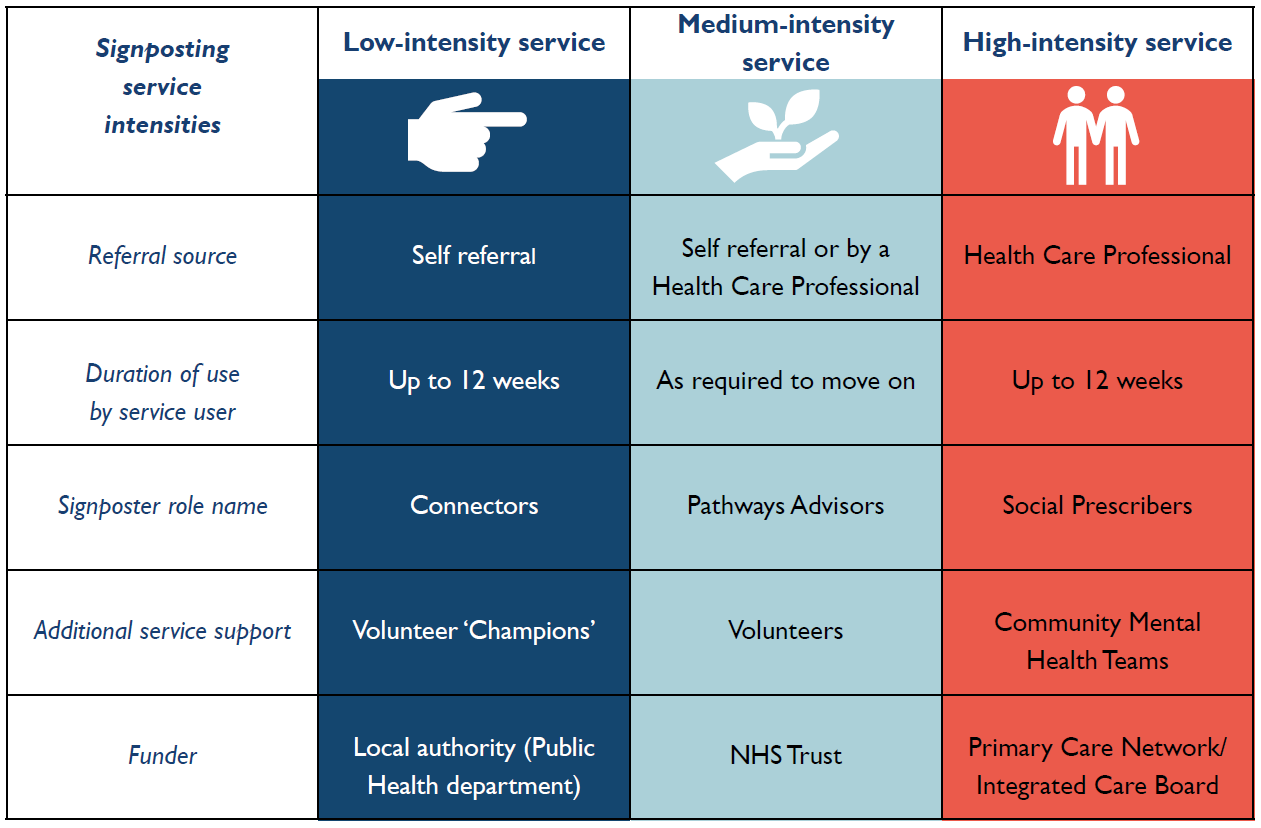
Our research has shown there are three different levels of signposting service intensity:

Low intensity

Medium intensity

High intensity
Each service intensity has a different structure, level of support & way of working with service users.
Understanding these models can help organisations provide services that match local community needs.
We outline these service models by explaining how they work & interact with other services & systems.
Who runs these services?
Services are provided with structural & funding support by a range of operating organisations:

Local Authorities

Community health services

Primary Care services
Characteristics of different signposting service intensities