
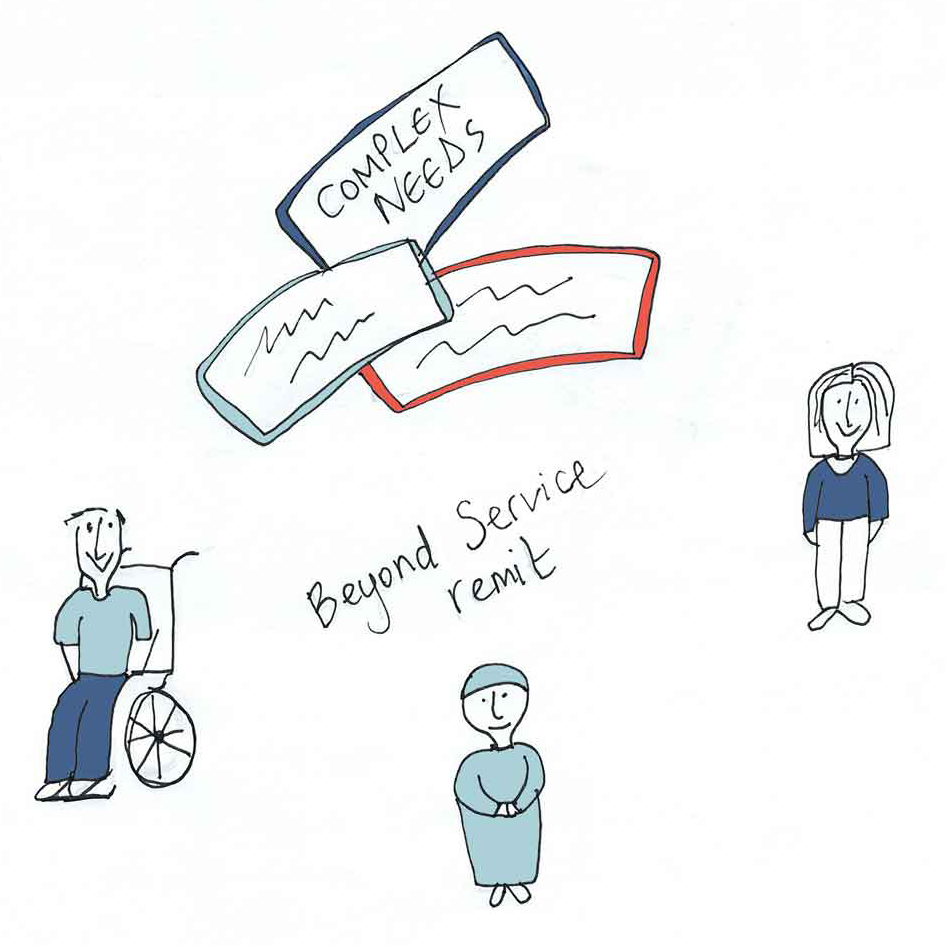
People often have complex personal needs. For example: intense social isolation, vulnerability, trauma, and severe depression.
This means community signposting services sometimes get inappropriate referrals from Adult Social Care and their staff haven’t got the skills to support people with mental health problems beyond the service’s remit.
Staff find it difficult to fully support people’s complex needs.
Staff working with Adult Social Care sometimes get inappropriate referrals that are difficult for them to support.
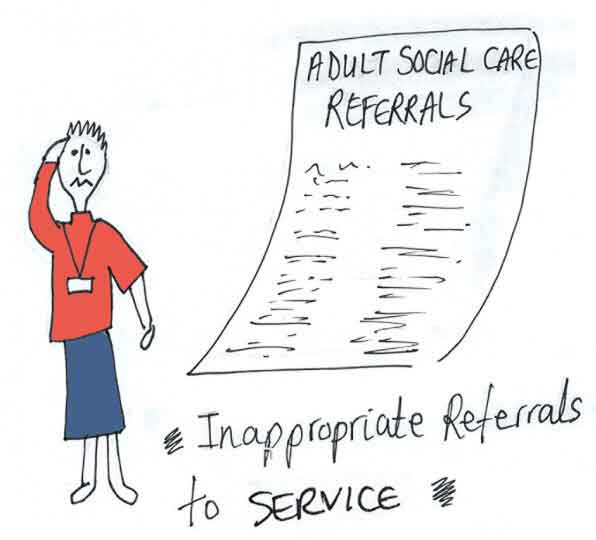
“Sometimes we get really inappropriate referrals where the person needs social care or more intense support than what they could receive from us, but we try and refer them on to the right people. I’d do like a care-line phone call with them and try and get them the support.“ – Signposter
“We’re working with people with mental health needs, and it should be low to moderate mental health. But what we are finding increasingly is because there’s long waiting lists for counselling, it’s hard to get into secondary mental health services. We’re finding that people are coming to social prescribing as a holding [area], so that is something we are having to be very careful of and making sure that we don’t become mental health practitioners because that’s not our role, we’re not trained in mental health” – Signposter

Staff are not equipped to support people with significant and/or undiagnosed mental health problems in their community signposting service.
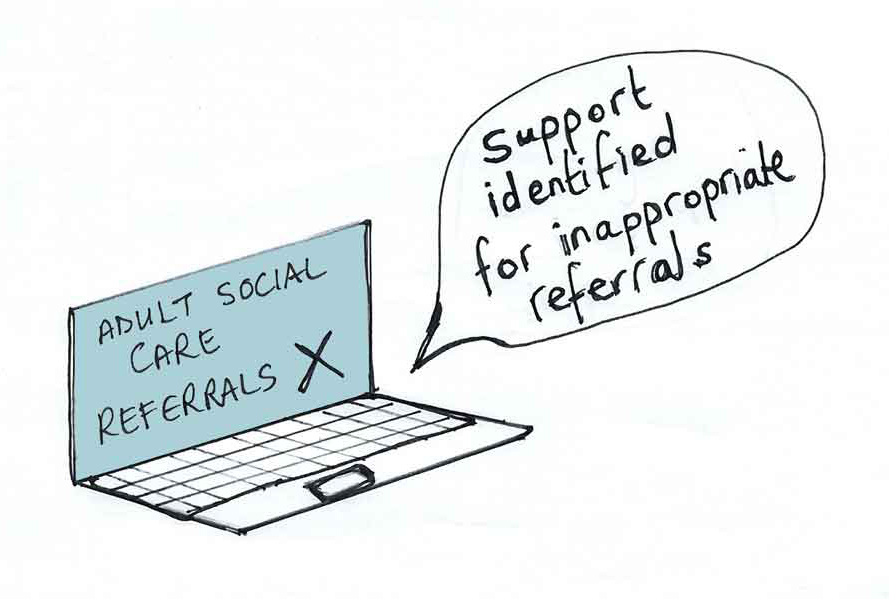
“we’re trying to balance and manage some very unwell people that probably aren’t suitable for social prescribing. What they need is psychology services, but they just do not have capacity or that person doesn’t meet the criteria, so therefore will not be supported and then you’ve got to try and find them other things that are probably only just going to stick a plaster on the issue… I’m just sticking a plaster on a problem, not actually helping to resolve one.” – Signposter
What to consider
Staff try to support referrals for people with complex needs, but their service is not equipped to handle this. Inappropriate referrals can create barriers for services to effectively provide personalised support.
Consider the following strategies for sustaining your service:
Finding ways to include people with complex needs in the service (-)
Receiving referrals for needs (e.g. Adult Social Care) that can’t be met by the service (-)
Providers try to support people with significant mental health problems (+)