
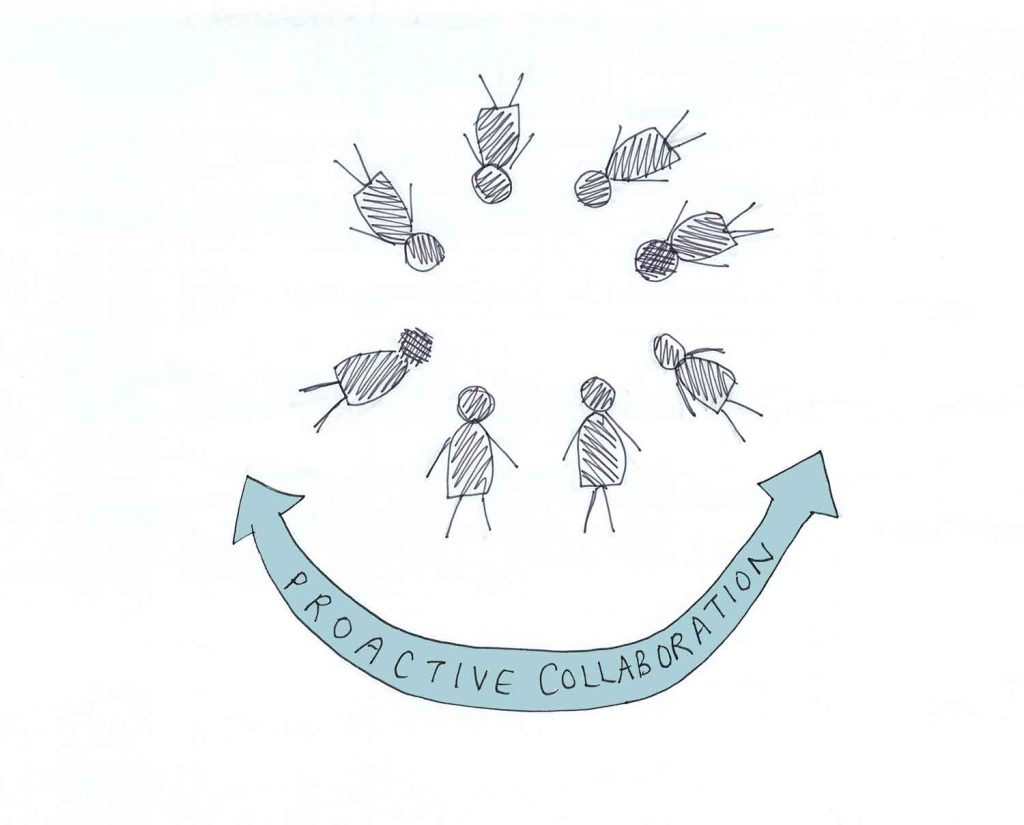
Working together allows providers to engage with & appropriately support service users in better ways.
This can be done by collaborating in trusted places in the community to address issues & service gaps. Doing this can reduce competition between providers.
Providers networked & shared information to identify service gaps in what was available to support service users locally, & find ways to address the gaps.

When providers can meet together, they can better support their community.

“it’s so important as a Community Connecter to build good relationships with the groups we work with, to always be out & about, speaking to these groups, maybe attending the groups & just building good relationships with the ones who run it.” – Signposter

Providers can engage better with service users when they make use of trusted places in the community (e.g shopping centres, supermarkets or pharmacies).
Providers who share responsibility in delivering support for service users have less competition between services.
“we also help get some projects off the ground if we identify gaps. That’s probably one of our main things is looking at the community & seeing what our service users need, & what’s not necessarily there. And if we can, try to help organisations be able to deliver it. So, my colleague recently got a PTSD support group set up with [Linked provider] & that’s been brilliant. So it’s like things like that are great because we can see things happening in real time as to when we see an issue & then hopefully we can find funding” – Signposter
What to Consider
Collaboration between services is important as it allows people to work together, share responsibility & help each other. This can improve service delivery & support service user outcomes. Consider these strategies:
Providers work together to strengthen community links & develop service (+)
Sharing workspaces & systems for referrals helps providers to respond quickly (+)
Signposters regularly promote service & are aware of community resources (+)
Staff & volunteers with lived experience help to keep them in the workforce & support better service user outcomes (+)